
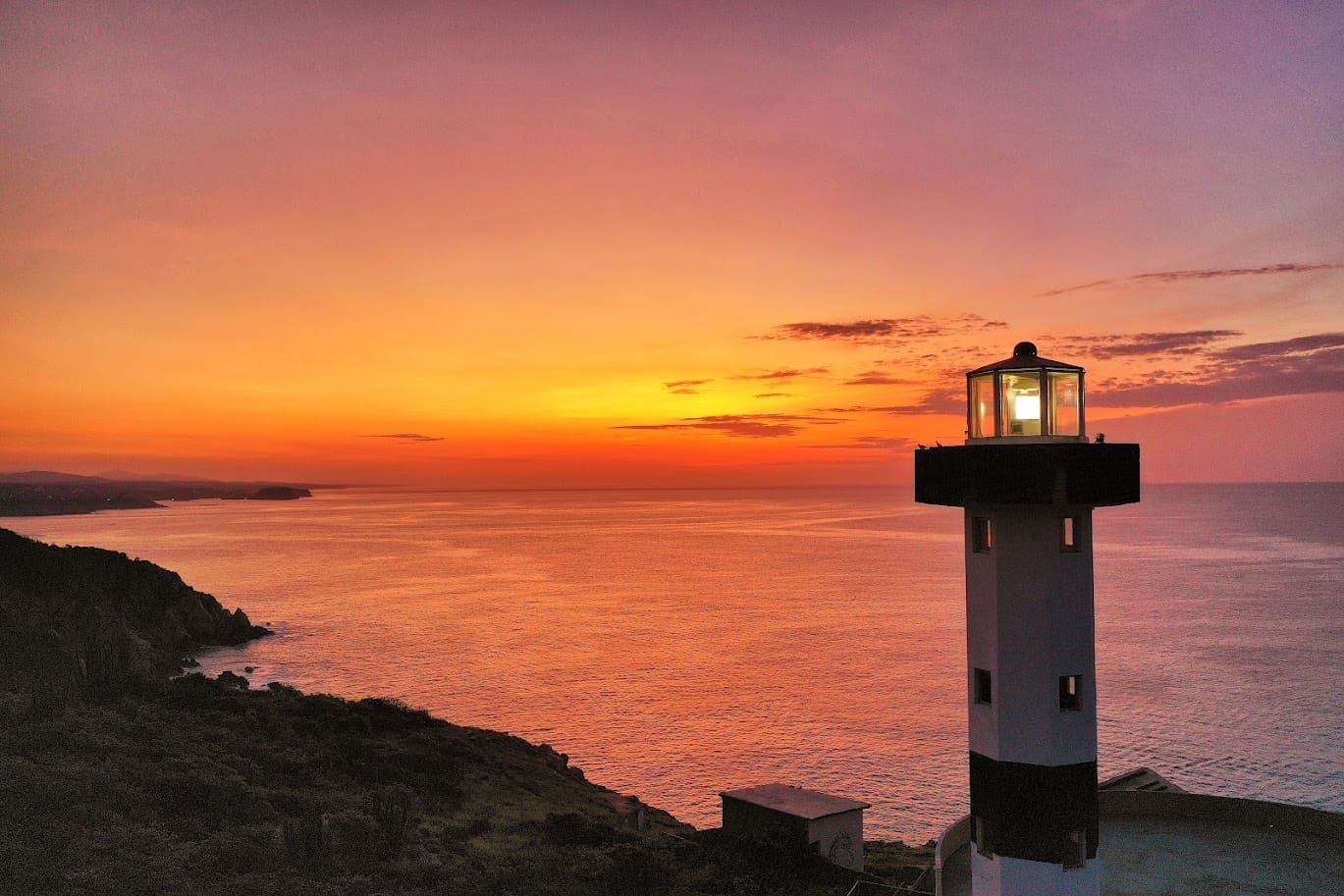
Huatulco is much more than its nine turquoise bays. Just a short drive from the resort, the Oaxacan Coast unfolds a world of landscapes, flavors and traditions that rarely make it into conventional guidebooks: coffee villages hanging among the clouds, crocodile lagoons, waterfalls hidden in the jungle and pilgrimage sanctuaries that have drawn the faithful for centuries. If you want to truly understand Oaxaca, step off the beach, even if only for a day.
In this guide you will find the 10 most fascinating destinations you can reach from Huatulco on a full-day excursion or a short getaway. For each place we tell you what to expect, the best time to go and how to pair it with other experiences in the region.
You can visit some of these spots on your own; for others, having a local guide makes the difference between a superficial visit and an experience that shifts your perspective. Take notes, pick your favorites and get ready to discover the Oaxaca that never shows up on the usual tourist map.
Quick Overview: The 10 Destinations at a Glance
Before we get into the details, here is a summary to help you plan your itinerary based on the time you have, the kind of experience you want and the time of year you are traveling.
| # | Destination | Distance from Huatulco | Type of experience | Best time | Logistical difficulty |
|---|---|---|---|---|---|
| 1 | Magic Waterfalls (Llano Grande) | ~40 km (25 mi) | Nature / Adventure | Year-round | Low (with a tour) |
| 2 | Ventanilla | ~65 km (40 mi) | Ecotourism / Wildlife | Jul–Feb (turtles) | Low |
| 3 | Pluma Hidalgo | ~75 km (47 mi) | Cultural / Food | Nov–Mar (harvest) | Medium |
| 4 | Puerto Escondido | ~150 km (93 mi) | Beach / Surf | Nov–May (waves) | Low (with a tour) |
| 5 | Juquila | ~100 km (62 mi) | Cultural / Religious | Nov–Dec (festivals) | Medium |
| 6 | La Bocana / Estuary | ~15 km (9 mi) | Nature / Relaxation | Year-round | Very low |
| 7 | The 7 Bays of Huatulco | Local | Sea / Snorkeling | Nov–May (visibility) | Very low |
| 8 | Oaxaca City and Monte Albán | ~250 km (155 mi) | Cultural / Archaeological | Year-round | Medium |
| 9 | Copalita and Archaeological Zone | ~25 km (16 mi) | Archaeological / River | Nov–May | Low |
| 10 | Río Grande / Huazolotitlán | ~60 km (37 mi) | Cultural / Crafts | Year-round | Medium |
1–2. Waterfalls and Ecotourism: The Living Jungle of the Coast
1. The Magic Waterfalls and the Llano Grande Waterfalls
Less than an hour from La Crucecita, the Oaxacan jungle hides a network of waterfalls spilling down moss-covered rock walls. The so-called Magic Waterfalls are the favorite for anyone who wants to cool off in fresh water without straying too far from the coast. Jade-colored natural pools, tropical birdsong and the cool shade of the forest make this spot a perfect break between beach days.
A few kilometers away, the Llano Grande Waterfalls offer a bigger experience: the route leads to taller cascades, with natural lookouts and the chance to swim in larger pools. The best plan is to combine both in a single day and add a traditional Oaxacan meal prepared on site.
You can visit the waterfalls with the Magic Waterfalls Tour with Lunch Included or the Llano Grande Waterfalls Tour with Buffet Lunch, both with transportation and a local guide who knows the trails and the best spots for photos.
2. Ventanilla: Crocodiles, Turtles and Mangroves
The Ventanilla lagoon is one of those places that reminds you why the Oaxacan Coast deserves protection. This mangrove ecosystem shelters a colony of river crocodiles living in semi-freedom, colonies of coastal birds (white herons, roseate spoonbills, ibis) and, between July and February, the massive arrival of olive ridley turtles to nest on its beaches.
The boat ride through the estuary channels is quiet and slow, which lets you watch the wildlife without disturbing it. The local community runs the ecotourism on a cooperative basis, and part of the income goes to conservation programs overseen by the National Commission of Natural Protected Areas (CONANP).
If you want to combine a Ventanilla visit with the Turtle Release with Transportation, the thrill goes up a notch: picking up a newly hatched turtle and guiding it toward the sea is one of those experiences that stays with you forever. You can also do the full route with the Ventanilla Ecotour with Wildlife and Coastal Villages, which includes stops in fishing communities and a fresh fish tasting.
3–5. Sierra, Coffee and Devotion: Inland Oaxaca
3. Pluma Hidalgo: The Highest Coffee in Mexico
Climbing to Pluma Hidalgo from the coast is like changing planets in under two hours. The road rises from sea level to the 1,350 meters (about 4,400 feet) of this small mountain town, crossing radically different vegetation zones: coastal mangrove, tropical dry forest, semi-evergreen forest and mountain cloud forest.
Pluma Hidalgo produces one of the best-known specialty coffees in Mexico and Latin America. Its arabica beans, grown on slopes shrouded in constant mist and volcanic soil, have floral and red-fruit notes that coffee tasters describe as exceptional. Visiting the coffee farms during harvest season (November to March) lets you see the whole process: hand-picking the red cherries, fermentation, washing, sun-drying and small-batch roasting.
The Pluma Hidalgo Coffee Tour includes transportation from Huatulco, a farm visit, a guided tasting and the chance to take home coffee straight from the grower. It is a treat with no equivalent anywhere else on the coast.
4. Juquila: Pilgrimage and Living Culture
Santa Catarina Juquila is one of the most visited religious sanctuaries in Mexico. The image of the Virgin of Juquila draws millions of pilgrims a year, many of them on multi-day walks from different parts of Oaxaca and the country. Even if you are not a pilgrim, Juquila is just as fascinating: a mountain town with markets full of flowers, candles, wooden crafts and the scent of copal that fills every corner.
The Juquila Cultural Tour is the most comfortable way to get there from Huatulco, with the historical and cultural context you need to understand the phenomenon of faith this image represents for the Zapotec and Mixtec Indigenous communities of the region. According to INEGI, Oaxaca is the state with the greatest linguistic and cultural diversity in Mexico, and Juquila is one of its most powerful meeting points.
5. Oaxaca City and Monte Albán
Although it makes for a long day, with about four hours on the road from Huatulco, visiting the city of Oaxaca and the archaeological site of Monte Albán is an experience no curious traveler should miss. The state capital is one of the best-preserved colonial cities in Mexico: its green-stone streets, its markets full of tlayudas and chapulines, its mezcal bars and its pre-Hispanic art museums make up a dense, stimulating world.
Monte Albán, a UNESCO World Heritage Site, was the first great Mesoamerican city and sits on an artificially leveled mountaintop about 400 meters (1,300 feet) above the Oaxaca Valley. Its platforms, ball court and astronomical observatory still impress a thousand years after it was abandoned. The Oaxaca, Monte Albán, Markets and Culture Tour packages this route into one full day with comfortable transportation and a specialized guide.
6–8. Coast, Sea and Secret Beaches
6. La Bocana and the Huatulco Estuary
Just 15 minutes from La Crucecita, where the Copalita River meets the Pacific Ocean, one of the calmest and most photogenic landscapes on the whole coast opens up: La Bocana. Here the fresh water of the river mixes with the salt water of the sea in an estuary lined with palm trees and riverside vegetation, forming a fine-sand beach little known to mass tourism.
It is the perfect destination for anyone looking to escape the busier bays. You can get there by shared taxi, paddle a kayak through the estuary, watch birds from the shore or simply stretch out under a palapa with a book. Pair it with the Sunrise Kayak Tour to experience early morning on the water, when the sky turns orange and the river is completely silent.
7. The 7 Bays of Huatulco
No list of places near Huatulco would be complete without the bays themselves. There are actually nine Huatulco Bays, spread along 36 kilometers (22 miles) of coastline protected by Huatulco National Park. Each bay has its own personality: Tangolunda is the most developed, San Agustín the most rustic, Cacaluta the most pristine (restricted access) and Maguey the most family-friendly.
The classic way to explore them is by boat, stopping to snorkel over coral reefs and spot dolphins and octopus. The 7 Bays Yacht Tour and the Bays Catamaran Tour let you explore them in comfort, with snacks on board and a guide to help you identify the marine life. The Oaxaca Ministry of Tourism recognizes the National Park as one of the best-preserved marine reserves on Mexico's Pacific coast.
8. Puerto Escondido: Waves, Markets and Mezcal
About 150 kilometers (93 miles) to the northwest, Puerto Escondido is Huatulco's beachy alter ego: louder, more bohemian, more surf. Zicatela Beach is world famous for its barrels, considered some of the most perfect in the Pacific. But Puerto Escondido has more layers: the seafood market at Puerto Angelito, mezcal nights on the Adoquín, Carrizalillo beach for swimming in calm water and the Manialtepec Lagoon for spotting flamingos at sunset.
Driving from Huatulco along the coastal highway takes about two hours, with spectacular curves above the cliffs. The Puerto Escondido Tour from Huatulco takes care of the logistics and adds stops at beaches and viewpoints you would otherwise drive right past.
9–10. History, Crafts and Living Communities
9. Archaeological Zone of Copalita Park
About 25 kilometers (16 miles) east of La Crucecita, at the mouth of the Copalita River, the Copalita Eco-Archaeological Park holds the remains of a Zapotec city that flourished between 900 and 1500 CE. Excavations have uncovered ceremonial platforms, a ball court, tombs and a wide variety of pottery now on display in the site museum.
What makes Copalita remarkable is that the archaeological zone shares space with interpretive trails through native flora and fauna, ocean views and direct river access for a swim. It is a half-day destination that combines culture, nature and beach in a single outing without traveling far.
10. Río Grande and Huazolotitlán: Living Crafts
About 60 kilometers (37 miles) west of Huatulco, the municipalities of Río Grande and Huazolotitlán are Mixtec communities where backstrap-loom weaving, pottery and alebrije carving are still part of everyday life. Visiting these towns is like stepping into a different time: women weave cotton garments with geometric designs that carry centuries of tradition, and you can buy directly from the maker.
This kind of community tourism, when practiced respectfully, generates a direct economic impact for artisan families and helps preserve techniques recognized as intangible cultural heritage. The Oaxaca Ministry of Tourism actively promotes these cultural routes as part of responsible tourism in the region. Round out the visit with the Sunset City Tour with Viewpoints and Tasting in Huatulco to end the day with panoramic views and artisanal mezcal.
What Travelers Say
“I thought Huatulco was just the beaches, and honestly that's mainly why we came. But on the third day we decided to try the coffee tour in Pluma Hidalgo and it was the most impressive part of the trip. Climbing in an hour from the heat of the coast to the mist of the mountains, seeing the coffee plants loaded with red cherries and sipping a freshly roasted espresso looking out over the valley… we wouldn't trade that for anything. We're already planning our return to do the waterfalls and Ventanilla.”
— Daniela T., Mexico City (visited Huatulco in November)
Practical Tips Before You Go
- Start early whenever you can. Mountain destinations like Pluma Hidalgo and Juquila are more enjoyable in the cool of the morning, before the sun gets strong. Boat rides in Ventanilla are also calmer before 9 a.m.
- Pack layers. The Oaxacan Coast has extreme microclimates: you can leave a 30°C (86°F) beach and arrive at 16°C (61°F) in Pluma Hidalgo or Juquila. A light sweater or rain jacket always comes in handy.
- Water and sunscreen. Essential on any excursion, especially at the waterfalls, where the dirt road can be longer than expected.
- Bring cash for local communities. Many markets, artisans and small eateries in the villages don't take cards. Carry small bills.
- Book ahead in high season. December, Holy Week and summer are periods of heavy demand. The most popular tours (waterfalls, bays, Ventanilla) sell out days or weeks in advance.
- Respect the ecosystems. On turtle nesting beaches, in the Ventanilla mangroves and on the coral reefs of the bays: don't touch wildlife, don't use conventional sunscreen in the sea (use mineral) and follow your guide's instructions.
- To visit Ventanilla during turtle season, check the protection periods with CONANP, since some beaches have restricted night access.
Frequently Asked Questions About Excursions From Huatulco
How many days do I need to see the area around Huatulco?
With a 5-day trip you can comfortably combine 2 or 3 full-day excursions (for example, waterfalls + Ventanilla + Pluma Hidalgo) without sacrificing beach time. To add Puerto Escondido or Oaxaca City, you ideally want at least 7 days, or overnight stays along the way.
Is it safe to travel to these places on my own, or do I need a guide?
Destinations such as La Bocana, Copalita Park and the bays are accessible independently. For the waterfalls, Pluma Hidalgo, Juquila and Ventanilla, a local guide adds safety on the roads, cultural context and access to spots that would be hard to find alone. Puerto Escondido and Oaxaca City are fully tourist-ready and easy to navigate without a guide.
When is the best time to visit Ventanilla to see turtles?
Olive ridley turtles come ashore in large numbers on the beaches of the Oaxacan Coast between July and November (arrival season), most intensely during the mass nesting events known as arribadas. Nest hatching and hatchling releases happen mainly from September to February. To witness a release, the best window is October–January.
Can I visit Pluma Hidalgo at any time of year?
Yes, Pluma Hidalgo can be visited year-round, but the fullest experience comes during coffee harvest season (November to March), when the plants are loaded with red cherries and the processing is in full swing. In the rainy season (June–October) the clouds drop low and the scenery is spectacular, although the access roads can be slippery.
How long is the trip to Monte Albán from Huatulco?
It is roughly 4 hours each way by road (8 hours round trip), so it is done as a long day tour with an early departure and a return around sunset. The route crosses Oaxaca's Sierra Sur with stunning scenery. If you want to explore Oaxaca City at a more relaxed pace, spending a night there is highly recommended.
Can children join these tours?
Most of these destinations are suitable for families with children. The waterfalls, Ventanilla, La Bocana and the bays are especially kid-friendly. Juquila and Oaxaca City require a bit more patience from little ones because of the travel times. Releasing turtles is an experience children often remember for the rest of their lives.
Conclusion: Huatulco Is Only the Beginning
The Huatulco bays are the gateway to one of the richest and most diverse territories on Mexico's Pacific coast. Behind that strip of turquoise water are mountains with specialty coffee, lagoons with crocodiles, beaches with turtles, villages with centuries of history and cities that take you back to the deepest roots of Mexico. Every destination on this list has something that will surprise you, and all of them are within reach of a well-organized excursion.
Explore, ask questions, get up off the beach chair and discover that the best version of this trip is one you haven't lived yet.
Information may change; confirm schedules, regulations and availability before booking. For legal, environmental or safety matters, consult local authorities or official sources. Have questions? Contact us directly and we'll gladly help.